
What Is Email Marketing and How Does It Work?
Email marketing is the use of email to communicate with an audience in order to educate, nurture relationships, promote an offer, retain customers, or encourage a specific action. Unlike a social post that depends on a platform feed, an email is sent to a defined list of recipients. That makes email useful not only for promotions, but also for newsletters, onboarding, product education, lifecycle communication, re-engagement, and customer retention.
The important part is the system behind the send. Effective email marketing connects audience permission, useful content, segmentation, timing, deliverability, measurement, and continuous improvement.
How Does Email Marketing Work?
At a basic level, email marketing follows a simple cycle:
- Build an audience. People join your list through forms, purchases, registrations, lead magnets, events, or other appropriate collection methods.
- Store and organize subscriber data. An email marketing platform keeps contacts and can organize them by attributes, interests, lifecycle stage, or behavior.
- Create the message. You choose the purpose, audience, subject line, content, offer, and call to action.
- Send or automate delivery. A campaign can be scheduled for a particular time or triggered automatically by an event such as a signup or purchase.
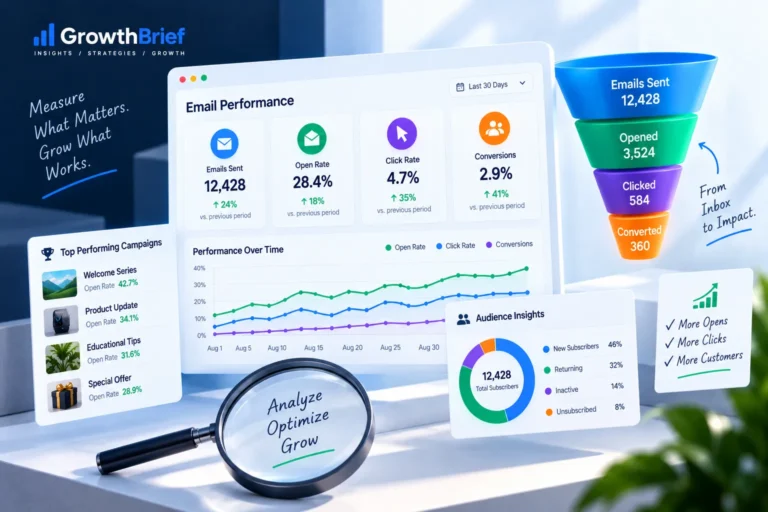
- Measure what happened. Marketers examine delivery, clicks, conversions, unsubscribes, bounces, complaints, and other useful signals.
- Improve the next decision. Results are used to refine targeting, content, timing, offers, workflows, and list quality.
This cycle is why email marketing should be treated as a system rather than simply a tool for sending bulk messages.

The Main Parts of an Email Marketing System
1. The email list
Your list is the group of contacts eligible to receive your communications. List quality matters more than collecting the largest possible number of addresses. A smaller audience that expects and values your emails can be more useful than a large list of disengaged contacts.
Clear signup expectations also matter. People should understand what they are signing up for and should have an appropriate way to stop receiving marketing messages. Legal requirements differ by jurisdiction, so businesses should understand the rules that apply to their audience and operations.
2. The email marketing platform
An email service provider, or ESP, manages the infrastructure used to create, send, automate, and measure campaigns. Depending on the platform, it may also provide signup forms, templates, segmentation, contact management, transactional email, testing, reporting, and CRM features.
If you are evaluating platforms, our email marketing software guide explains the capabilities that matter when comparing tools.
3. Segmentation
Segmentation means dividing an audience into meaningful groups instead of treating every contact identically. A business might segment subscribers by customer status, interests, engagement, location, product usage, purchase history, or another relevant characteristic.
The purpose is not to create as many segments as possible. It is to make the message more relevant to the person receiving it.
4. Campaign content
Every email needs a job. That job might be to explain something, bring a reader back to useful content, announce a product, complete onboarding, recover interest, generate a sale, or retain a customer.
A clear purpose helps determine the subject line, message length, design, call to action, audience, and success metric.
5. Automation
Not every email needs to be manually scheduled. Automation allows messages or sequences to respond to defined triggers and conditions. A new subscriber, for example, might enter a welcome sequence automatically rather than waiting for the next newsletter.
Our email marketing automation guide covers triggers, workflows, branching, and the decisions involved in building automated journeys.
6. Deliverability
Pressing Send does not guarantee that a message will reach the inbox. Deliverability is influenced by factors such as sending practices, authentication, reputation, list quality, engagement patterns, complaints, and message characteristics.
For a deeper explanation, see our guide to email deliverability.
7. Measurement
Email reports can produce many numbers, but the useful metric depends on the purpose of the campaign. Clicks may matter for a content newsletter, purchases for a promotional campaign, completed onboarding actions for a lifecycle sequence, and retained engagement for a re-engagement program.
Metrics should help answer a decision question rather than simply fill a dashboard.

Common Types of Email Marketing
Email marketing includes more than promotional blasts. Common formats include:
- Newsletters: recurring updates, education, commentary, or curated resources.
- Welcome emails: messages that introduce new subscribers to a brand, product, or next step.
- Promotional campaigns: emails built around an offer, launch, event, sale, or product.
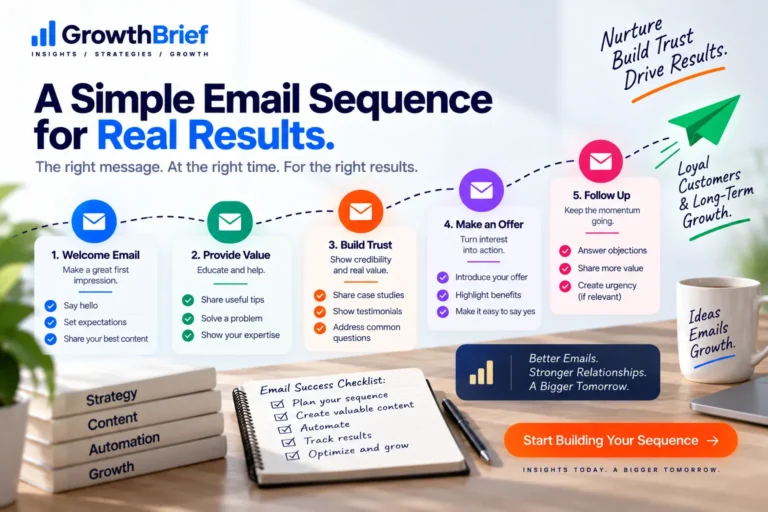
- Lead-nurture emails: sequences designed to educate prospects and move them toward a decision.
- Lifecycle emails: communications based on where someone is in the customer journey.
- Re-engagement emails: campaigns intended to understand or recover declining engagement.
- Behavior-triggered emails: messages initiated by an action or event rather than a fixed broadcast schedule.
Transactional messages such as receipts, password resets, and account notifications are also delivered by email, although their primary purpose differs from marketing communication and different rules may apply.
A Simple Email Marketing Example
Imagine a software company publishes a practical guide and offers a related checklist. A visitor signs up to receive it.
The company could send the checklist immediately, follow with a short welcome sequence, segment the subscriber according to the topic they selected, send useful educational emails over time, and later introduce a relevant product capability. If the subscriber becomes a customer, the communication can shift toward onboarding, adoption, education, and retention.
The value comes from connecting messages to the recipient’s context rather than repeatedly sending the same promotion to the entire database.
Email Marketing vs. Email Automation
Email marketing is the broader discipline of using email to communicate with an audience. Email automation is one method within that discipline.
A weekly newsletter scheduled manually is email marketing without necessarily being automated. A welcome sequence triggered by a signup is both email marketing and automation.
This distinction matters because buying automation software does not automatically create a good email strategy. The audience, message, timing, offer, measurement, and deliverability decisions still need to make sense.
What Makes Email Marketing Effective?
There is no single subject-line formula, send frequency, template, or benchmark that makes email work for every organization. Strong programs usually share several characteristics:
- Recipients have a legitimate reason to expect the communication.
- Each campaign has a clear purpose.
- The audience is targeted when relevance would improve the message.
- The content provides value beyond repeatedly asking for a purchase.
- Sending and list practices protect long-term deliverability.
- Unsubscribing is clear and respected.
- Results are connected to business or audience outcomes.
- Testing is used to learn rather than to chase isolated metric improvements.
What Should You Measure?
Useful email metrics can include delivery rate, bounce rate, click-through rate, conversion rate, unsubscribe rate, spam complaint rate, revenue or leads attributed to email, and performance at individual workflow stages.
Open rate can still provide directional information in some contexts, but privacy features and automated activity can make opens less reliable than they once were. It is better to interpret several signals together and prioritize metrics closest to the campaign’s actual goal.
Basic Email Marketing Compliance
Email rules vary by country and by the type of message being sent. At minimum, marketers should understand the requirements that apply to subscriber collection, sender identification, privacy, commercial messages, and opt-outs in the jurisdictions where they operate.
For example, U.S. CAN-SPAM requirements for commercial email include accurate sender/header information, non-deceptive subject lines, a valid postal address, a clear method for opting out, and timely handling of opt-out requests. Other jurisdictions can impose different or additional consent and privacy requirements.
This article provides marketing education, not legal advice. When compliance affects a specific business or audience, verify the current rules for the relevant jurisdiction.
How to Start Email Marketing
- Define the job. Decide what email should accomplish for your organization.
- Choose appropriate software. Match the platform to your list, workflows, integrations, reporting needs, and budget.
- Create a legitimate signup path. Explain what subscribers should expect.
- Start with a useful first communication. A welcome email or focused newsletter is often easier to learn from than a complex automation system.
- Establish measurement. Choose metrics connected to the purpose of the campaign.
- Protect list quality and deliverability. Monitor bounces, complaints, engagement, and sending practices.
- Expand based on evidence. Add segmentation, automation, testing, and more sophisticated journeys when they solve a real problem.
For the broader strategic framework, continue with the GrowthBrief email marketing guide.