Email Marketing for Small Business: Complete Starter Guide
Build a small-business email marketing system around permission, useful campaigns, simple automation, deliverability and measurable outcomes.
Start with one business goal
Choose a concrete objective such as repeat purchases, booked consultations, qualified leads, event attendance or customer education. The goal determines the audience, message and measurement.
Trying to optimize newsletters, promotions, nurture and automation simultaneously usually creates unnecessary complexity.
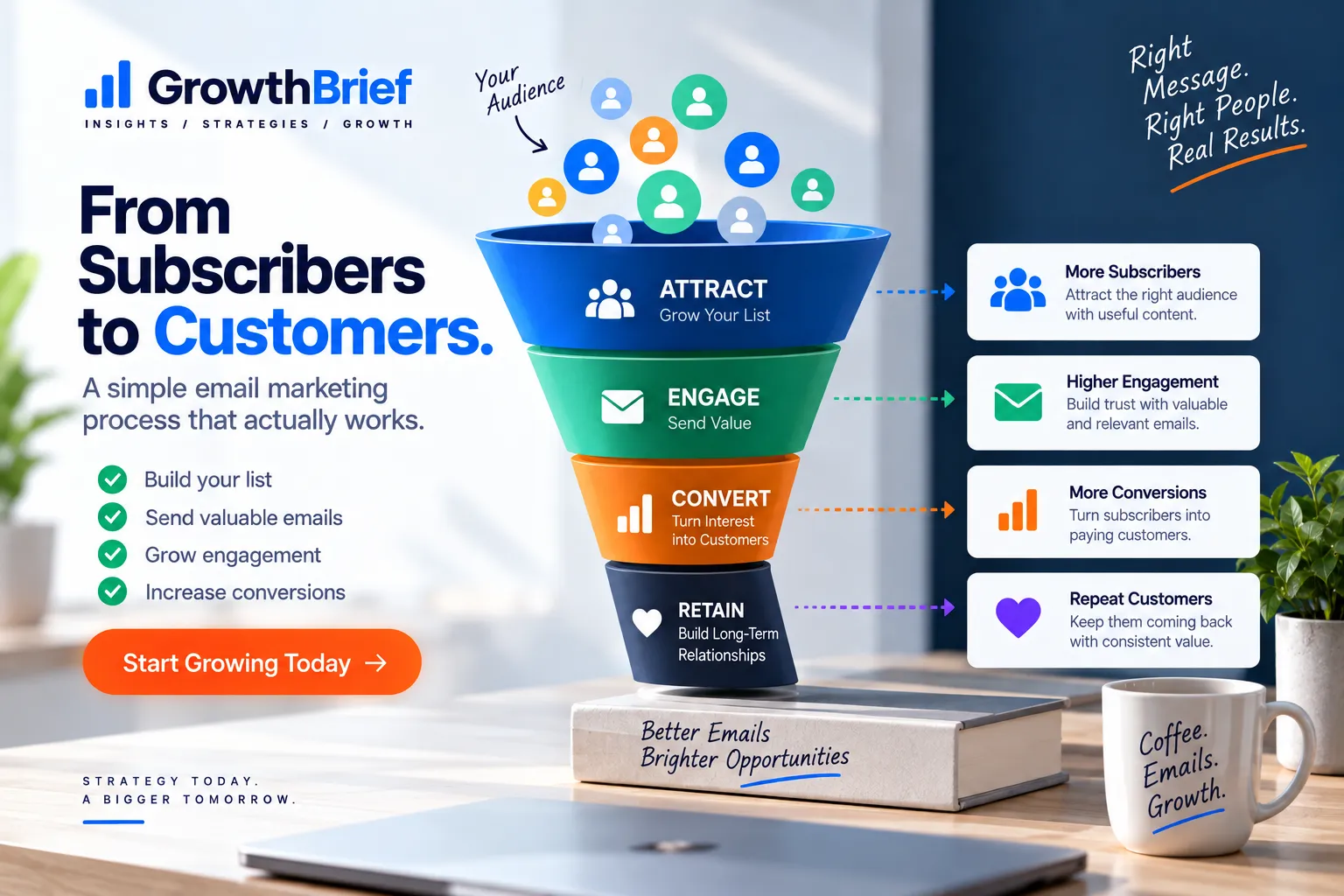
Build a permission-based list
Use website forms, relevant lead magnets, customer touchpoints and in-person signup with clear expectations where appropriate. Do not buy or scrape addresses.
Record acquisition source so you can compare list quality later.
Choose software for the workflow you need
Evaluate forms, list management, automation, integrations, reporting, deliverability controls, usability and pricing at your expected contact volume. A long feature list is less useful than a good fit with the actual workflow.
Use GrowthBrief’s email marketing software guide for the evaluation process.
Create the essential emails first
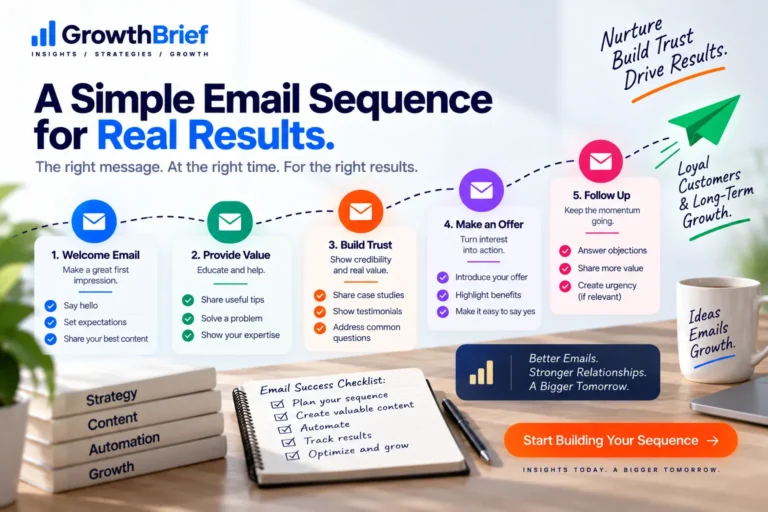
Start with a welcome message, one useful recurring campaign and one high-value lifecycle automation such as onboarding, post-purchase follow-up or lead nurture.
Prove that the foundation works before building dozens of branches.
Keep campaigns focused
Write for one audience and one primary action. Use a recognizable sender, accurate subject line, concise hierarchy and mobile-friendly CTA.
Consistency of useful communication matters more than elaborate design.
Protect deliverability
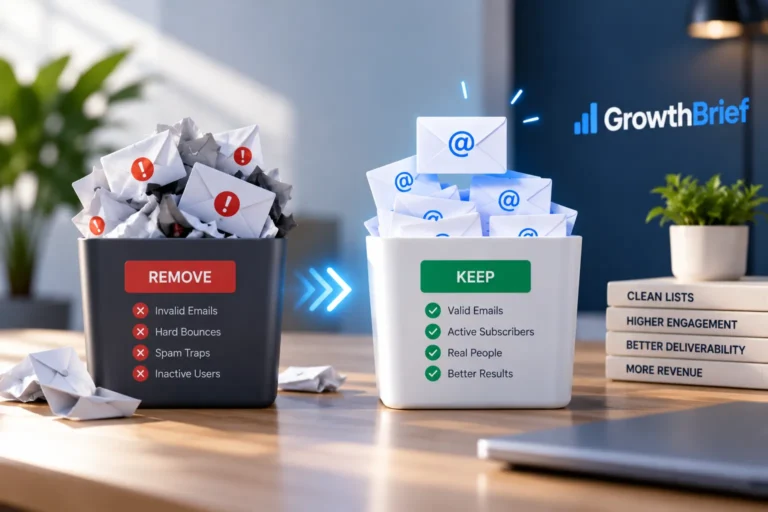
Authenticate the sending domain, monitor bounces and complaints, suppress invalid addresses and avoid suddenly blasting an old dormant list.
List quality and relevance are operational deliverability controls, not only content concerns.

Measure what supports the goal
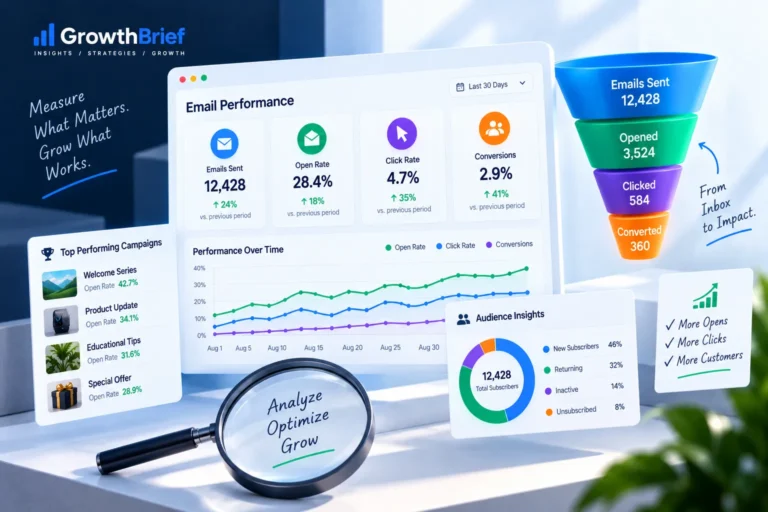
Connect campaigns to bookings, purchases, qualified leads or retention where possible. Use clicks and replies diagnostically and watch unsubscribes and complaints.
A simple monthly review with decisions is more useful than a dashboard nobody acts on.
A practical 30-day plan
Week 1: define goal, audience and software. Week 2: build signup points and welcome email. Week 3: prepare the first campaign, tracking and QA process. Week 4: send, review and document what to change.
Add automation only after the basic acquisition, sending and measurement loop works.
A Lean Small-Business Stack
A small business does not need enterprise complexity to run useful email. It needs a reliable signup method, a clean contact database, authenticated sending, one or two reusable templates, basic automation, and measurement connected to a business outcome. The software should reduce operational work rather than create a second job managing the software.
What to Build in Order
| Priority | Build | Why first |
|---|---|---|
| 1 | Permission-based signup + source tracking | Everything depends on audience quality |
| 2 | Welcome/confirmation | Sets expectations immediately |
| 3 | Repeatable campaign template | Creates a sustainable sending process |
| 4 | One high-value automation | Saves recurring work |
| 5 | Reporting routine | Turns sending into learning |
Budget Beyond the Subscription Price
Consider contact-based price increases, extra users, transactional sending, SMS or add-ons, integration costs, migration effort and staff time. A cheaper platform that requires manual work every week can cost more operationally than a slightly higher subscription that fits the workflow.
When to Add Complexity
Add lead scoring, advanced branching, multiple preference centers or deeper CRM integration only when the business process requires them. Complexity should solve an observed problem—such as routing qualified leads or personalizing onboarding—not imitate a larger company’s stack.
Frequently Asked Questions
Does a small business need email automation?+
Not necessarily at the beginning, but one or two high-value automations can save work once the basic program is stable.
What should a small business email first?+
A welcome email and a campaign tied to a real customer need are usually more useful than building a large automation library before sending anything.
How much should a small business spend on email marketing?+
Budget depends on contact volume, sending needs, automation, integrations and staff time. Evaluate total operating cost rather than only the subscription.
How often should a small business send emails?+
Choose a cadence the business can sustain with useful messages and that matches subscriber expectations.
What should a small business measure first?+
Tie email to a concrete business goal such as repeat purchases, bookings or qualified leads, then use engagement metrics to diagnose performance.
Similar Posts
What Is Email Marketing and How Does It Work?
Learn what email marketing is, how it works, the main types of marketing emails, and the practical steps behind building an effective email program.
Email Marketing Metrics Explained: CTR, Conversion, Bounce & Unsubscribe Rates
Understand email marketing metrics including CTR, conversion rate, bounce rate, unsubscribe rate and how to use them together to improve campaigns.
How to Create an Email Campaign: Step-by-Step Guide
Plan an email campaign from goal and audience through copy, tracking, QA, sending and performance review.
Email Marketing Templates: 12 Copy-Ready Examples for Different Campaigns
Use practical email marketing templates for welcome, newsletter, promotional, nurture, re-engagement and product campaigns.
How to Build an Email List: Strategies That Don’t Hurt Deliverability
Grow an email list through permission-based acquisition, useful signup offers and quality measurement without damaging sender reputation.