
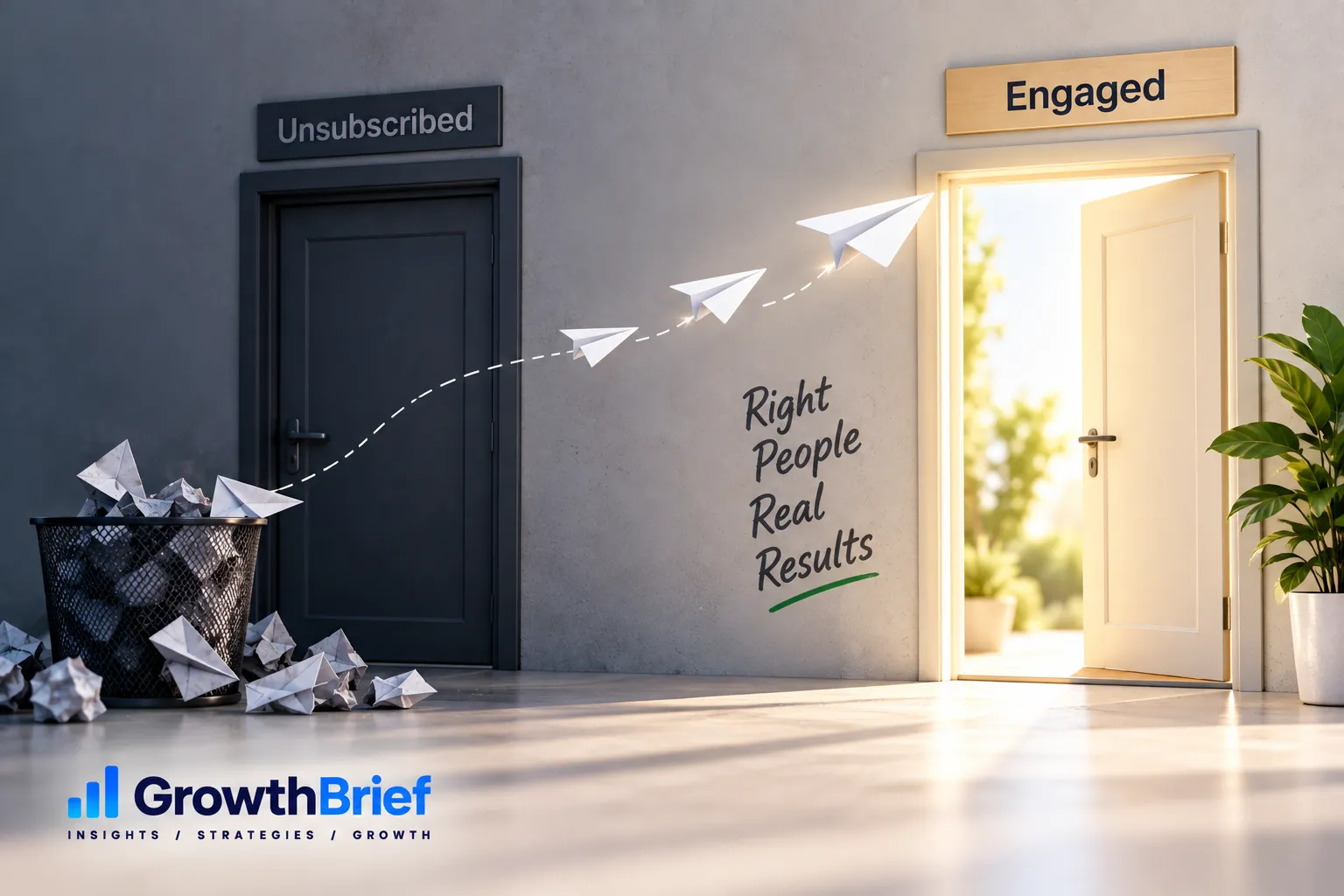
Email List Hygiene: How to Keep a Healthier Subscriber List
Email list hygiene is the ongoing process of keeping your subscriber database accurate, permission-based, useful, and free from addresses that repeatedly fail or no longer belong in normal sending. It is not a one-time “cleaning” exercise. It is part of maintaining a healthy email program.
Good hygiene supports reliable reporting, lower bounce risk, stronger audience relevance, and better email deliverability.
What Email List Hygiene Actually Includes
List hygiene can involve handling hard bounces, reviewing repeated soft bounces, correcting acquisition problems, managing long-term inactivity, removing obvious invalid data, and making sure unsubscribed contacts are not accidentally returned to promotional sends.
It should not mean deleting people simply because they did not open a few emails. Engagement data needs context.
Why Poor List Quality Creates Problems
A database full of invalid, abandoned, uninterested, or poorly acquired addresses can distort campaign metrics and increase negative signals. You may spend more to send to people who cannot or do not want to receive your messages.
More importantly, poor acquisition and list maintenance can contribute to complaints and reputation problems.

1. Remove or Suppress Hard Bounces
Hard bounces usually represent permanent delivery failures. Your email platform should normally suppress them automatically, but verify that the behavior is working as expected.
Do not repeatedly resend promotional campaigns to addresses that have clearly failed permanently.
2. Watch Repeated Soft Bounces
Soft bounces are temporary and should not always cause immediate removal. However, an address that soft-bounces repeatedly over a meaningful period may need suppression according to your platform’s handling rules and your own policy.
Learn more in our guide to hard vs soft bounces.
3. Protect the Signup Process
Good hygiene begins before an address enters the list. Use clear signup forms, realistic expectations, validation where appropriate, and acquisition sources you can trust.
If a source suddenly produces many invalid addresses or complaints, investigate the source rather than cleaning up the symptoms forever.
4. Respect Unsubscribes and Preferences
Unsubscribed contacts should remain suppressed from the communication types they opted out of. Preference centers can also help subscribers reduce frequency or choose topics instead of leaving completely.
The exact legal obligations depend on jurisdiction, but operationally the principle is simple: do not keep sending promotional email to people who have clearly opted out.
5. Define Inactivity Carefully
An inactive subscriber is not necessarily an invalid subscriber. Open tracking can be unreliable, so inactivity definitions should use the strongest data available.
Depending on the business, you may consider clicks, purchases, logins, product activity, website events, replies, or other meaningful signals alongside email engagement.
6. Use Re-Engagement Before Suppression When Appropriate
A re-engagement campaign can ask whether inactive subscribers still want to receive your emails, remind them of the value they originally requested, or let them update preferences.
If there is no meaningful response after a sensible attempt, reducing frequency or suppressing the contact may be better than sending indefinitely.

7. Review Imported Lists Carefully
Imports deserve special attention because they can introduce stale or poorly documented data quickly. Confirm the source, permission basis, age, expected audience, and suppression status before sending.
Purchased or scraped lists are especially risky because recipients may have no relationship with the sender and address quality can be poor.
8. Monitor Signup Source Quality
Break performance down by acquisition source where possible. One form, campaign, partner, or incentive may produce very different subscriber quality from another.
This connects directly with segmentation: source data can help you understand expectations and tailor follow-up appropriately.
How Often Should You Clean an Email List?
There is no universal calendar interval. Some hygiene should happen continuously through bounce and unsubscribe suppression. Broader engagement and source-quality reviews can happen monthly, quarterly, or at another interval that fits your sending volume.
High-volume senders usually need more frequent monitoring because problems can scale quickly.
What Not to Do
- Do not repeatedly send to known hard bounces.
- Do not re-add unsubscribed contacts to normal promotional lists.
- Do not delete active customers solely because an open pixel did not fire.
- Do not assume every imported address is healthy because the file uploaded successfully.
- Do not rely on a third-party “cleaning” service as a substitute for better acquisition practices.
A Practical Hygiene Checklist
- Hard bounces are suppressed.
- Repeated soft-bounce patterns are reviewed.
- Unsubscribes remain suppressed.
- Signup sources are monitored for quality.
- Inactive subscribers have a defined treatment.
- Imports are reviewed before campaigns are sent.
- Authentication and domain setup are maintained.
- Complaint and bounce trends are checked over time.
Hygiene Is a System, Not a Cleanup Event
The strongest list-quality programs reduce bad data at the source, handle delivery failures automatically, and review engagement in context. That is more sustainable than allowing problems to accumulate and running a large purge once a year.
Healthy acquisition, useful content, and responsible sending work together.
A 30-Minute Monthly List Hygiene Review
- Check hard-bounce and repeated soft-bounce trends.
- Compare unsubscribe and complaint patterns with the previous month.
- Review the quality of new signup sources.
- Identify long-term inactive subscribers using more than open data alone where possible.
- Confirm suppression lists are still intact after imports and integrations.
- Review any unusually large imports before the next campaign.
This short review is more useful than waiting for the list to become visibly unhealthy. It turns hygiene into a routine operating process rather than a crisis response.
Example: When Not to Delete an “Inactive” Contact
A customer may not open marketing emails but may still log in, purchase, or interact with your product. If you define inactivity only from opens, you could remove someone who is still commercially active. Use the strongest business signals available before suppressing a contact solely for inactivity.
Frequently Asked Questions
What is email list hygiene?+
It is the ongoing maintenance of subscriber data so invalid, unsubscribed, repeatedly failing, and no-longer-useful addresses are handled appropriately.
Should I delete inactive subscribers?+
Not automatically. Define inactivity using reliable signals, consider re-engagement, and distinguish low email activity from customers or users who are still active elsewhere.
How often should list hygiene be performed?+
Bounce and unsubscribe handling should be continuous. Broader inactivity and source-quality reviews can be scheduled based on list size and sending volume.
Do email verification tools replace list hygiene?+
No. Verification can help with some address-quality checks, but it cannot replace permission, acquisition quality, engagement management, and proper suppression processes.
Can list hygiene improve deliverability?+
It can support deliverability by reducing invalid addresses and negative signals, but it is one part of a larger system that includes reputation, authentication, content, and subscriber behavior.
