Lead Nurturing Emails: Strategy, Sequence & Examples
Lead nurturing emails are messages designed to move a prospect from initial interest toward a useful next step by matching content to their needs, behavior and stage in the buying process. The goal is not to send more email. It is to reduce the gap between what a lead knows now and what they need to know before taking action.
What Is a Lead Nurturing Email?
A nurturing email provides relevant information after a person becomes a lead but before they are ready for the main conversion. Depending on the business, that conversion might be a purchase, consultation, demo, trial upgrade or application.
Nurturing can be automated, but automation should follow intent. A download, webinar registration, product-page visit or trial signup can justify different follow-up paths.
Lead Nurturing vs Drip Campaigns
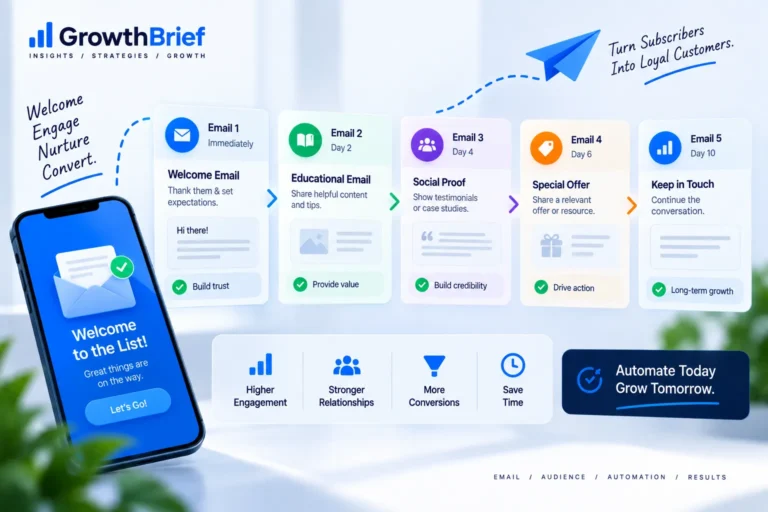
A drip campaign is usually a predefined series delivered over time. Lead nurturing can use drip sequences, but it can also adapt to behavior, segmentation and lifecycle stage. A lead who visits a pricing page may need a different next email from someone who has only read an introductory guide.
A Practical Lead Nurturing Sequence
1. Deliver the promised value
Immediately provide the resource, confirmation or next step that caused the signup. Avoid turning the first message into an unrelated sales pitch.
2. Clarify the problem
Help the reader understand the problem they are trying to solve. Use a useful framework, checklist or example rather than repeating generic benefits.
3. Teach the decision criteria
Explain what the prospect should evaluate when comparing approaches. This creates useful context for your solution without forcing a premature pitch.
4. Address a major objection
Use evidence, an example, a process explanation or an FAQ to resolve a common source of hesitation.
5. Present the next logical action
Invite the lead to a demo, consultation, product page, trial or other step that matches their demonstrated intent.
Use Behavior to Improve the Sequence
Combine email segmentation with meaningful signals such as signup source, pages viewed, content downloaded, product interest or customer status. Do not treat every open as strong intent; privacy features can make open data less reliable than direct actions such as clicks, form submissions and purchases.
How Long Should a Nurture Sequence Be?
There is no universal number. A simple offer may need only a few messages, while a considered B2B purchase can require a longer education cycle. Build each email around a job it must perform, then stop adding messages when the sequence becomes repetitive.
Lead Nurturing Metrics
Measure progression, not just opens. Useful signals include meaningful clicks, replies, qualified conversions, demo requests, trial activation and revenue where attribution is reasonable. Our email CTR guide explains click measurement, while the email conversion rate guide covers downstream action.
Common Lead Nurturing Mistakes
- Sending the same sequence to leads with very different intent.
- Making every email a direct sales pitch.
- Using arbitrary delays without considering the buying cycle.
- Continuing a nurture flow after the recipient has already converted.
- Measuring success only by opens.
Lead Nurturing Checklist
- Define the conversion the sequence supports.
- Map the questions a prospect needs answered first.
- Choose a clear trigger and exit condition.
- Segment when needs materially differ.
- Give each email one primary purpose.
- Measure movement toward the business outcome.
Lead Nurturing Email FAQs
Are lead nurturing emails only for B2B?
No. The concept applies whenever people need useful follow-up between initial interest and conversion.
Should every lead enter the same nurture sequence?
No. Different signup sources, needs and lifecycle stages can justify different paths.
Can lead nurturing be automated?
Yes. Email marketing automation can trigger and branch nurture workflows based on defined events and conditions.